Raw Acacia Honey
This Raw Acacia Honey is a luxurious treat from the mountains of India, with the floral complexity of acacia flowers and the strong, sweet taste that honey-enjoyers love. Its clean-but-flavorful combination is the result of its wild-collected, organic, and raw qualities, kept to rigorous standards by our harvesters.
What Is Acacia Honey?
From the Jammu region of the Himalayas, this honey is collected by bees who solely harvest acacia nectar. That’s what gives it a light, mild taste, a pure sweetness, and a subtle tang. It also sets this honey apart from other brands—wild bees untouched by pesticides, collected deep in the mountains of the Himalayas, and never brought above hive-temperature or processed through heavy filtration. This is the correct choice for honey lovers looking for a pantry staple—for a unique, flavorful, yet still-familiar honey.
Acacia Honey Benefits
Acacia Honey is one of the most versatile honeys, with a mild flavor, a clean palate, and a deep, rich color. Combined with environment-friendly sourcing, our impressive line of certifications like USDA Organic, Fair Trade, and Glyphosate Residue-Free, and the meticulous choices we make to ensure the most minimal processing, you can rest easily knowing that this honey is exactly what you want it to be. It crystallizes slowly, it’s safe, it’s clean, and it’s delicious.
Why Choose Raw Acacia Honey?
“Raw” honey means little for official industry standards, but to Heavenly Organics, it means everything. In supermarkets, honey is often sold processed and heated to stop the crystallization process and maintain consistency, but it removes beneficial enzymes and antioxidants. We never let our honey rise above hive-temperature, and we keep our honey organic, meaning that no pesticides or GMOs get anywhere close to our products. Glyphosate, a powerful herbicide, is found in almost all honeys around the United States—but not at Heavenly’s. We keep our products clean, and we ensure that the bees are safe throughout the entire process.
How to Use Acacia Honey?
- Stir it into your tea—particularly green, jasmine, or an earthy herbal tea.
- Drizzle into yogurt or over toast.
- Use it as a sweetener in baked goods.
- Let it sweeten a marinade or a dressing, and help to break down protein.
- Take a spoonful after a meal to boost digestion and satisfy that sweet tooth.
Choosing Your Size
- 12 oz jar – This smaller jar of honey is a great gift, is a decorative element on a countertop, and easy to spoon out of.
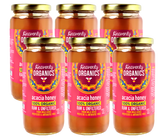
- 22 oz jar – This jar is economic, more delicious honey to have on hand, and when you’re done, don’t throw it out! Re-use the jar!
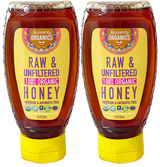
- 16 oz squeeze bottle – This bottle is great when you’re in a rush or a hectic kitchen. Just squeeze, drizzle, and keep going!
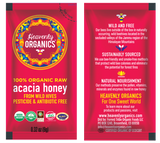
- Honey Sachets – With 200 sachets, this box is perfect for food services, catering events, and right by the office coffee machine.
Storage & Crystallization
Honey doesn’t spoil, but some people get nervous about its crystallization. It’s perfectly normal! And it’s a sign of the honey’s natural purity. To make sure that your honey stays beautifully pourable, keep the lid closed, away from direct sunlight, and in a room-temperature spot. And if it crystallizes, don’t worry! Place your jar or bottle in a bowl of warm water, and those crystals will dissolve until the honey is as good as new.

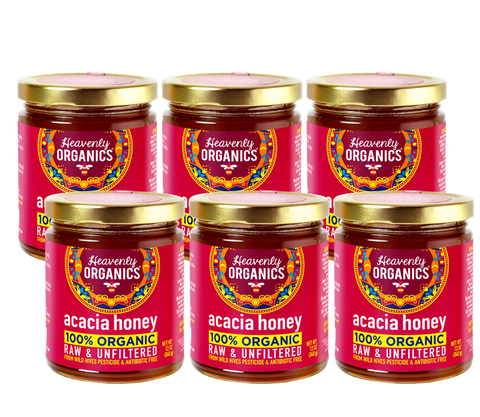

 12oz. Jar
 22oz. Jar
 Squeeze Bottle